 |
 |
|
 |
||
|
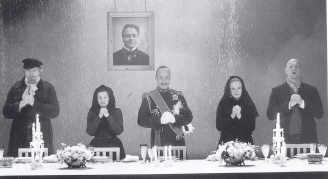
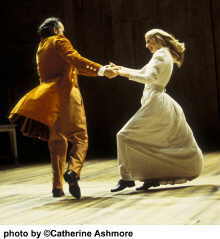
John Browne Babette's Feast Conductor Yuval Zorn First things first; Tom Piper has transformed the uncomfortable and unloved Linbury Studio by cladding the walls and floor with painted-pine and ripping out the seats, which are impossibly cramped for the long-legged. May they never come back! The action comes right into the audience in this theatre in the 3/4-round, the proximity helping to hold the interest of children sitting on the floor and specially built rostra. At a stroke we feel included in the action which takes us from cold monochrome Nordic austerity to an outbreak of collective warmth and fellow feeling after the strange Babette (Allison Cook imposing and mysterious) enters dressed in bright red and splurges her lottery winnings on a banquet like unto none ever known in northern-most Norway. Detailed plot summaries can be found in several reviews, notably Roderick Swanston's appreciation for OnLine Review London; suffice it here to comment on a few points. A lot of the story line will have passed above the heads of the kids, unless they were well prepared in class beforehand, but there was plenty going on to feed the imagination and a few magical coups de theatre, Tim Yvette Bonner and Claire Wild please as the desirable sisters Philippa and Martine who don't quite break away from the Sect; the charismatic singing teacher (Roderick Earle) steals his scene with Phillipa (pictured together) but,after one chaste kiss, is chased away never to return. The music of John Browne is deft and more, particularly in his instrumentation for 8 players, always imaginatively responsive to the action. It was projected with skill and affection by Yuval Zorn, very much in charge of a score in which the music is 'motivated through the story of the characters on stage', holding attention moment to clever moment. The whole makes a memorable unity, though the climax with the magical dinner scene is a little muted, and the best effects were dependent more upon the staging and lighting than the musical essence, which ideally is the chief driving force of opera. The wood cladding also helped the notoriously dry acoustic and contributed to an uncommonly happy and thought provoking 72 minutes at the Linbury. The cast finishes their transforming experience dancing in snow which is caught by the kids as it falls. Adults and children in the audiences will have come away from this restaging from 2002 (pictured below) with different experiences of enjoyment and plenty to discuss. This is an opera which should travel the world, and John Browne's next is keenly awaited.
Peter Grahame Woolf
|

 Supple keeping the people and the few props continually on the move. Some of the parts were insufficiently developed.