
 |
 |
|
 |
||
| Handel – Clori, Tirsi e Fileno
Wigmore Hall – 27 October 2005
Clori – Claire Booth Tirsi – Mhairi Lawson Fileno – Hilary Summers
The music of Handel is a subject which I approach with some diffidence, sharing as I do the view of many older opera goers that nothing worth bothering about was written for the stage before the advent of the divine Mozart. Additionally, it is so confusing for the newcomer - men invariably dressed as women and women as men. No doubt this added to the enjoyment of Handel's audiences who spent their time trying to sort out the men from the ‘boys'. It is pointless, however, to criticise practices which were governed by the dramatic conventions of the time and were exploited to the full by Handel. At the time this work was composed he was working in Italy , more particularly in Rome . The Papal censor had banned the performance of opera, but the Romans, as ever, found a way around this by performances of the secular cantata. This was a popular entertainment with his patrons, presumably at the equivalent of today's dinner parties.
This cantata calls for three voices, accompanied by a group of instrumentalists, and follows the contemporary trend for the pastoral theme of the shepherd rejected by the nymphs who, rather conveniently seem to frequent the Alban hills. Clori, the girl in question, is a soprano while her frustrated suitors were originally sung by castrato voices. The sound of the last of these is preserved in a primitive recording of Professor Moreschi, made about a hundred years ago. It is not really a pleasing sound but it has something mysterious about it - a glimpse of something unattainable and exotic, like the Dodo and Great Auk. One can only imagine the castrato voice in its prime to be somewhat akin to a combination of the sensuous timbre of Pavarotti combined with the virtuoso technique of a Sutherland.
The problem of replacing the castrato ‘shepherd' was the subject of much controversy during the last century. At one time, well known singers plunged into Handel operas without too much consideration for authenticity. Even a fastidious musician like Fischer-Dieskau transposed the role of Giulio Cesare for his sturdy baritone. Later, the introduction of the counter tenor provided a more suitable alternative. I have to record some personal prejudice in the matter of higher men's voices, dating inevitably from my school days. An Italian classmate was gifted with a mellifluous alto voice and was thus the focus for the adulation of teachers and parents while I was summarily dismissed from the choir, which had no use for a twelve year old baritone. Such things still rankle after all these years.
Happily Tirsi and Fileno were taken on this occasion by a mezzo and a contralto, thereby combining with a soprano Clori and enabling the audience to recognise the characters without too much difficulty. I was struck by the range of expression required of the singers. Carrying on what is virtually a conversation against a discreet accompaniment, it highlights the emphasis placed on words, in the absence of what modern taste would expect by way of action. It also explains the hold which certain artists, particularly the castrati, maintained over the audience of the 18 th century. They were the ‘superstars' of the day, some like the famous Farinelli, amassing large fortunes against the time when their vocal gifts were in decline. Given the accomplishment of the three delightful young ladies appearing this evening, I do not think anyone worried about the absence of a castrato, certainly the music made its full effect and pleased the capacity audience.
The text of this cantata contains the usual extravagant declarations of undying love on the part of the two suitors both smitten with Clori. The latter was sung by Claire Booth who varied her tone of teasing affection without ever giving the impression that her heart was totally involved. Mhairi Lawson as Tirsi was a virtuoso display of frustrated love, while the rich tones of Hilary Summers contrasted with the two lighter voices as the forthright Fileno. Some of the sentiments expressed would not be acceptable today: ‘the fickle desires of the weaker sex are so obvious'. After a display of vocal tantrums on the part of the shepherds, both eventually swallow their pride in a rather abrupt change of mood and join Clori in a trio finale, praising the virtue of Hope. Not quite Bridget Jones material , I feel.
Christian Curnyn presided over his small band of instrumentalists, who recreated something of the courtly atmosphere of the first performances of 1707. The Early Opera Company deserve their success in promoting appreciation of a period previously unknown to vocal enthusiasts. The question remains - why were such entertainments so popular? One presumes that they fulfilled the same function as TV soap operas do in modern times - the reassuring repetition of familiar situations and equally predictable reactions by the actors. In spite of Da Ponte and his parody of such behaviour in Mozart's Cosi fan tutte, the music is worthy of revival, if only to remind us of the more mundane moments in Handel's career, before he attained the heights of Samson and The Messiah.
Stewart Jenkins
|
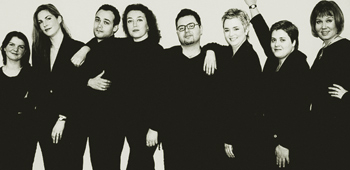 Early Opera Company/Christian Curnyn