DARK IN DARK - OAE AT QEH
Orchestra of the Age of Enlightenment/Elizabeth Wallfisch
Queen Elizabeth Hall 1 December 2003
HANDEL Overture to the Ode for St Cecilia's Day
JANITSCH Adagio from Quadro in G minor "O Haupt voll Blut und Wunden"
DOVE The Middleham Jewel (commissioned by the Art Fund in 2003)
PURCELL Chaconne from Act V of The Fairy Queen: Dance of the Chinese Man and Woman
OSWALD Serenata No. 4 in A major for 2 violins and basso continuo; Four Airs from The Seasons
VIVALDI Concerto in D minor from L'Estro Armonico Op. 3 No. 11 R565
This programme of 18th century music was enticing, the items chosen to relate to with works of art by Canaletto, Marinali, Batoni and others, currently on display next door at the Hayward Gallery, all acquired with support from the National Art Collections Fund.
The concert concluded a study day which some of the audience had been attending; we had been warned that the Curator of the exhibition was unavailable for the pre-concert discussion, so arrived only just in time for the music. Behind the orchestra were projected the (sometimes) relevant pictures, which were also reproduced superbly in the lavish illustrated programme book opposite explanatory texts about the music.
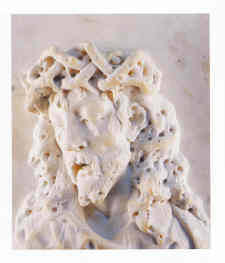
Most relevant and memorable of the juxtapositions was a movement by Janitsch (1708-63), a composer known probably to but few of us. Quoting a Bach chorale and subtitled 'O sacred head now wounded' it matched Marinali's exquisite marble relief to perfection.
Lively Scottish pieces by Oswald were pleasant enough, but quickly forgettable, nor helped by having to look at a laird proudly displaying the animals he had been killing. Nor did Purcell's 1692 chaconne from The Fairy Queen become any more Oriental than it isn't under the V&A's porclain group of Chinese Musicians (c. 1755).
And so it went on - with Nick Breckenfield telling us that Handel's Overture is 'entirely appropriate as a soundtrack to Rowlandson's Vauxhall Gardens' Ouch!!
Jonathan Dove’s specially commissioned The Middleham Jewel seemed discursive without our having been able to read until afterwards its elaborate programmatic structure, based upon the discovery of a national treasure with tiny pictures of fifteen saints.
Dove stirs minimalist patterns, carols and plainchant into a vaguely English pastoral style. The bassoon 'snaked up through the strings', reminding me of Britten's setting of Tennyson's The Kraken. He makes good use of theorbo etc, and the piece will be worth hearing again. Seeing the tiny jewel itself, projected above the players during the concert, but not magnified enough to see the detail which inspired Jonathan Dove, was no substitute for easier access to a little knowledge.
Enjoyment for those of us who came more for pleasure than study was blighted by a fashionable problem these days, presentation of music to an audience plunged into complete darkness to create 'atmosphere' (c.f. SBC's Inside Monteverdi Study Weekend eaarlier this month).
We had to look at black-garbed musicians in blackness (even during platform re-arrangements 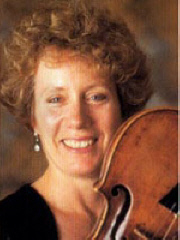 between items) instead of being free to browse through our programmes as usual. Since music was surely never intended to be listened to so solemnly in the 18th C, the whole thing was irritating as well as being incongruous - gloomier than a funeral parlour, said my companion.
Elizabeth Wallfisch led well prepared performances from the violin, reserving her opportunity to shine as a virtuoso soloist to Vivaldi's delicious concerto, doubly familiar because it is one of those which J S Bach transcribed for the organ.
Quite a nice little concert, but a poor recommendation to the potential of well designed 'cross-over' events between visual and musical arts.