 |
 |
|
 |
||
|
Johann Strauss II arr A Muller The Spirit of Vienna (Wiener Blut) Clonter Opera – The Britten Theatre, London 6 October 2005 Conductor – Anthony Legge
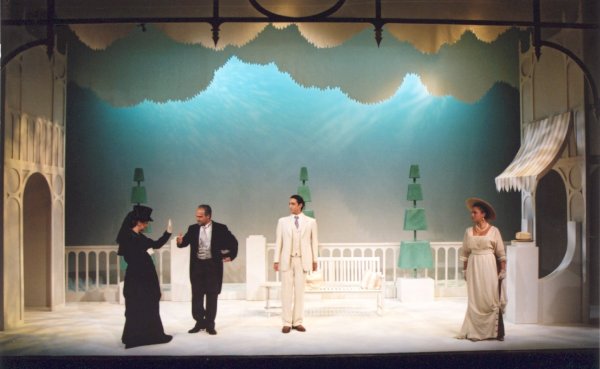
This well known pasticcio was concocted by Adolf Muller, with Johann Strauss's approval, although the latter did not live long enough to see it staged. The libretto by Viktor Leon and Leo Stein, is a frothy romantic tale set at the time of the Congress of Vienna. Countess Zedlau has become bored with her apparently dull husband and returned to her father's estate. Left on his own, the Count has quickly absorbed the spirit of Vienna and having installed the glamorous dancer Franziska Cagliari as his mistress, he now has his eye on Pepi, a pretty shop assistant, who just happens to be the girl friend of his valet Josef. The Countess returns to the city for the festivities surrounding the Congress, as does the elderly bachelor Prince Grindelbach, providing the recipe for endless assignations and cases of mistaken identity. Good manners and gemutlichkeit prevail, and Strauss's music waltzes the three couples to a happy ending. Clonter's is an altogether stylish production with elegant sets and lighting, intelligent direction and a cast who look superb in their sumptuous costumes. The small orchestra, under the capable direction of Anthony Legge, coaxed out the sparkling melodies in light hearted manner. The singers were equally assured, producing quite gorgeous tone and soaring high notes. But, as is so often the case with operetta, getting the words across was the real bugbear. Wiener Blut has a reputation for poor word setting, and although Clonter have a newly commissioned translation and adaptation by Nigel Douglas, not all of the problems appear to have been solved. Spoken dialogue was fine, and well acted, but too few sung words were distinguishable. Alexander Grove (the Count) was excellent in this respect, (and made light of the demands of this difficult tenor role,) and Michaela Bloom (Pepi) also stood out. Aside from that, the roles were so well characterised that words were not essential, and the enthusiastic audience left, humming contentedly as they made their way home. © Serena Fenwick
|