
 |
 |
|
 |
||
|
Tippett Festival at Wigmore Hall 4 January 2005 String Quartet No. 1; Boyhood's End; String Quartet No. 3 [first performed at Wigmore Hall]; The Heart's Assurance [first performed at Wigmore Hall] Introduced by Steve Martland, who emphasised that only a small proportion of Tippett's output was performed regularly, this was the first of the evening concerts in an intensive week of study sessions and performances of Sir Michael's more intimate music, part of a wide and comprehensive centenary tribute.
The Lindsays played with their usual intensity and, tonight, complete unanimity; they made Tippett sound far easier than Haydn last week! Mark Padmore took on Tippett's two major works for tenor and piano and confirmed their viability as unique and important contributions to the literature. Boyhood's End, setting a prose narrative by W H Hudson, is marvellously evocative of idealised country life of the author's youth, and The Heart's Assurance treats of more fateful and ever topical concers, characterised by Tippett as 'the experience of Love under the shadow of death'. Padmore rose to the not inconsiderable demands of both cantata and song cycle, and Andrew West made light of accompaniments which had Britten (who premiered both works with Peter Pears) complaining of their extreme difficulty. (West's recital with Emma Bell was one of my top favourite vocal CDs of last year). Two more Tippett Quartets tonight, and the Wigmore Hall festival continues until Jan 9. But for a critical perspective on the flood of Tippett revivals under way, bear in mind Norman Lebrecht's characteristically challenging demolition job: "Michael Tippett did more harm than good to British music and doesn't merit the centenary celebrations planned - here's the paradox - the woollier Tippett's music grew, the more powerful were his advocates. There is not a musical administrator in the land who will fail to pay in the coming year fervent tribute to our great centennial Briton. (The Evening Standard, London) Hilary Finch gives a more balanced, if again sceptical, verdict in The Times.
|
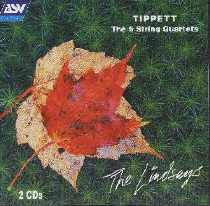 It attracted me because these two quartets are less often heard than No 2, and because the Lindsays had been closely associated with the composer. They sounded closely identified with the music and both emerged as strong works, the six movement 3rd, with its two fugal movements, bringing to my mind late Beethoven for its innovatory quality which has not dated at all in the half century since it was composed.