 |
 |
|
 |
||
|
Cavalieri
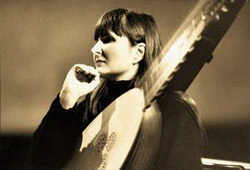
Rappresentatione di Anima et di Corpo L'Arpeggiata/Christina Pluhar Christina Pluhar - harpe baroque, theorbe Emilio de' Cavalieri's historically important opera, reckoned to be the earliest surviving example of the new genre, was first seen in Florence, 1600. The work ushers in the new style of recitar cantando and the score contains the first example of a figured bass. It is sketchy and needs editorial expertise to bring the opera to life. This semi-scenic production just qualified to be squeezed into Antwerp's pre-Baroque festival of early-early Italian polyphonic music, and it represented one strand of Polifonia Italiana (Flanders Festival 21-29 August 2004); the larger presentations in this prestigious festival have succeeded in attracting large audiences to enjoy unfamiliar rennaissance music, its appeal heightened by fielding varied instrumental line-ups, and, in this case, costume, choreography and lighting. Older early music aficionados may have felt with us that we had been there before? David Munrow entranced us during the '60s with concerts in which he deployed (and played himself) a large array of (then) rare instruments in carefully planned thematic sequences (always with an interval for animated discussion). Raymond Leppard introduced Cavalli to Glyndebourne with attractive orchestrations, now considered by purists to have been over-the-top romantic and unauthentic. There followed a few decades of austerity; now, operating in a highly competitive market, new experiments are being tried and it must be stressed, those of Christina Pulhar were enthusiastically received by the Antwerp audience. La Rappresentatione di Anima et di Corpo has eight soloists, supported by small groups of singers representing blessed and damned souls respectively. It has a Prologue and three acts, these divided into five to nine scenes each, the whole played continuously in Pluhar's production which we could only glimpse intermittently in the flat seating, with a stage only slightly raised, so that we could not see her playing theorbo and baroque harp when not standing to conduct; an imposing figure with waist length red hair. Her staging at De Roma was of a co-production with Utrecht's Early Music Festival which followed, and I would hope that audiences there will be favoured with a more suitable venue? Our difficulties during a long evening were compounded by the decision to play the opera in darkness and without intervals between the acts, which would have allowed us to stretch our legs and to try to work out who were the singers we'd been hearing and where we were in the moral saga (also a respite outside for smokers - an opportunity which was seized in the only concert of those we attended given with a short interval). Pluhar's La Rappresentatione seemed to be at a dress rehearsal stage, with some parts fully memorized, other singers using scores or small books (probably texts) to help them keep on course. We were able to watch behind the orchestra a vigorous dance by Vanity and fights between Good and Evil. The Prologue was given in a disconcerting and disorienting, but not unattractive, modern dance routine, which warned us what might be in store, but relative normality was restored for a time in Act One. Later, one scene was taken by a jazz singer, and we enjoyed it. I expected more of the same to round off the proceedings, but the ending was an interminable Chaconne of Paradise and Hell in which everyone had their turn and the instrumentalists each took a solo spot, the dulcian and, most strikingly, the cornetto excelling. On the way home we were assured by knowledgeable locals that this entertainment had not been Cavalieri's famous work, so I would advise 'opera twitchers' minded to catch this early example of the genre in Utrecht to check out other reviews first. I searched for available recordings in Gramofile but the Naxos version, which can be sampled on Amazon, is not recommended by Gramophone, and the on-line review of Märzendorfer's from Salzburg turns out to be mixed up with a review of Wozzeck!
|