 |
 |
|
 |
||
|
LINN CKD 225 [SACD 62 mins]
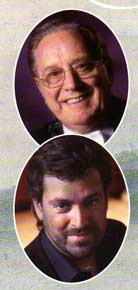
No. 14 in C sharp minor, Op. 27, No. 2, "Moonlight" Naxos Historical 8.110759 Artur Pizarro , winner of the 1990 Leeds International Piano Competition, is resuming his Beethoven sonata cycle at St John's, Smith Square this month, playing five mid-period sonatas on 16 October, when this CD will be launched. His remaining recitals will also be recorded for broadcasting on Radio 3. Is it another recorded cycle in the making? In my first experience, there was a wide gulf between the live experience and the recorded sounds, notably because of the church acoustic; good for some musics, but unfavourable for the piano. Certainly the live performances sounded better on the BBC broadcasts; I have quandaries about returning to St John's for more Beethoven sonatas. Equally important is the question of instrument, about which I have recently had increasingly ambivalent feelings. At St John's, Pizarro plays a Steinway. For the Linn recordings, the choice of a Blüthner grand model 1 has been decisive, (q.v. my welcome for Pizarro's recording of four popular "named" sonatas). I endorse the record company's claim that the Blüthner 'allows Artur's attuned sense of lyricism and romantic line to flourish'. These performances of the three late sonatas too have a fine, confident sweep and display Pizarro's easy, fluent virtuosity. Op 109 has an intimacy and dynamic reticence which I liked, and the studio recording and careful pedalling ensure clarity. I am increasingly chary of judging recording quality; CDs sound so different on my several players and set-ups and the listener nowadays has a lot of control. Yesterday Sean Rafferty on BBC R3's In Tune shared with listeners his confusion about SACD - it would be helpful if this latest wonder could be provided for reviewers to test and help readers decide whether the additional expenditure for "Stereo Hybrid SACD" is justified. The SACD format is problematic and, mysteriously, Linn's will not play on my new computer (which has an excellent sound system and plays CDs & DVDs) despite the best efforts of my computer guru. You should be able to access three representative movements of this CD on Linn's website at http://www.linnrecords.com/listen/listen_window.asp?RecordingID=266 . There is excellent coverage of Pizarro and his Beethoven project on the BBC Website at http://www.bbc.co.uk/radio3/classical/pizarro_biog.shtml. Meanwhile, in the same week I received, for revisiting and review, another volume of the historic Schnabel series, as refurbished with judicious wizardry by Mark Obert-Thorn; those performances on 78s originally impressed on my brain and memory for life. What never fails to amaze is that adjustment to the not-too-sanitised sound of these CD re-releases takes no more than half a minute before you ignore the background noise. Better than rehearsing their excellence (and Pizarro knows them inside out) just listen; they can be heard on line by searching new releases - historical at http://www.naxos.com/naxos/uk/naxos_uk.htm.
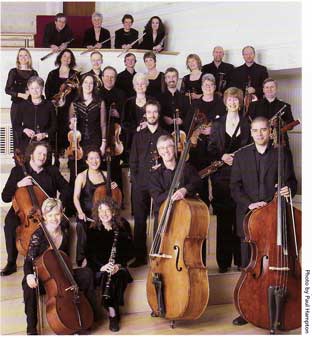
Beethoven Piano Concertos 3, 4 & 5 Artur Pizarro & Scottish Chamber Orchestra/Sir Charles Mackerras Linn CKD 336 This must be one of the very best, but we don't indulge in comparative reviews and stars. It evinces happy cooperation between all concerned, with our leading octogenarian conductor and a great pianist who has proved himself through winning the Leeds competition long ago, and by important Beethoven sonata recordings as well as much else - especially for us, Blackheath's fondly remembered pianoworks festivals 10 years ago. The great Scottish Chamber Orchestra (Linn names its every member in the liner notes), a fine Bluthner piano (which makes a huge difference) and a class technical team working in a perfect recording venue at Perth complete the recipe... This twofer offers musical and sonic pleasures to surpass most live concerto performance experiences, and for connoisseurs the interpretations are full of delightful details best enjoyed at home. It leaves me thinking of others, not just of Barenboim who took London by storm with the sonatas last year, and is set to repeat that furor later this year, but "lesser" musicians who tend to be relegated as also-runs against the acknowledged "greats" old and new. Amongst those on disc, I would put in a bid for the Duchâble/Nelson DVDs, with multiple approach extras. That set has an additional, unusual poignancy because it was François-René Duchâble's final recording before retiring from the concert platform by choice - not because of old age or failing abilities - which he explains in interview. Definitely different ! I have been pleased to confirm that Pizarro's double disc is being sold two-for-one at top price, £13. That seems fair, and purchasers should not look for cheaper Beethoven concerto sets, of which there are doubtless plenty. But I have (in my ignorance) been startled to find Linn's own range of prices which I copy below... Recording technology continues to advance and is becoming ever more complicated. I have been saddened by inability to find a firm prepared to lend us, for reviewing purposes, a record player that can cope with SACD & BlueRay discs, which we do receive for review; none of my musician reviewers, audiphiles though they be, has been able to afford these luxuries. [Linn's discs carry a motto that they "sound even better through a Linn CD player".] I listened to Pizarro's Beethoven 4 on our venerable Marantz CD player, through an equally ancient but serviceable Sony amplifier and into two (tiny but excellent) Jamo speakers. The detail emerged strongly, especially notable the resonances within the piano during the fading of chords. Before completing this report I have listened to the first movement of the Emperor through our tall 37 ins (sorry, 94 cm) Celef speakers, which have marginal advantage. So, am I disqualified from reviewing the classics - or do my listening circumstances, which include transfers onto my treasured iPod, reflect too those of many of our readers? Another new complication has just been introduced by Nimbus, who are selling for c.£25 all 104 Haydn symphonies, with a few concertos and overtures thrown in, on eight mp3CDs. Correspondents have written in disbelief of their claim, which I endorse, that those transfers are of CD quality; that is another story... I recommend Linn's Beethoven piano concertos. Nos 2 (the first) and No 1 (the second) are to follow, and I hope they might throw in the Choral Fantasia for another twofer? Compact Disc £13.00 Peter Grahame Woolf Reader responses would be greatly welcome
|
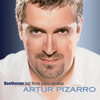 Artur Pizarro - Beethoven: Last Three Piano Sonatas
 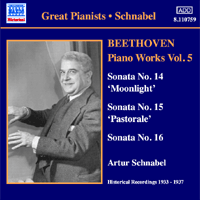 Artur Schnabel - BEETHOVEN: Piano Sonatas, Vol. 5