 |
 |
|
 |
||
|
Brendel at Royal Festival Hall London June 22, 2005
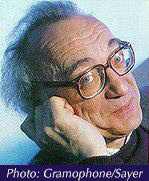
Alfred Brendel (piano) Attended by a full Royal Festival Hall of devotees who were determined that this would be a memorable recital in their collective memories and in the annals of the Hall, one is too readily caught up in the group psychology of the atmosphere. It is perilous to present a different view of the evening; one feels like 'the only soldier in step'! That was the last recital before RFH's closure for thorough acoustic and comfort refurbishment and, with my knees forced against the seat in front, the first half fully confirmed the need for both. My ears, not for the first time, confirmed my suspicion that the expensive press seats in the middle of row C of the Terrace Stalls are not good for listening to the piano. The programme was uncompromisingly backward-looking (Brendel first played there forty years ago; I had attended a pre-opening concert in which the reverberation was tested with gunshot!). I wondered what had been Brendel's first offering in the then new hall - it might well have been very similar? Should he (or the organisers of this important recital) be criticised for that? I think so, and that this final recital before prolonged closure ought to have encouraged piano enthusiasts to look forward whilst waiting for the re-opening razmataz with, presumably, Alfred Brendel to reassure us again that all is well with the classical music world! Brendel has often said that the core repertoire he generally offers is, simply, the best music for the piano that exists. He has played some early 20 C music (e.g. Schoenberg's concerto) but infrequently. No more recent composer is mentioned in Brendel's Yahoo Geocities biography. Yet wondrous music is being composed for the piano, little changed though the instrument be since the 19th century (q.v. for example, Murail's piano music, reviewed this week). The lengthy set of undistinguished Mozart variations was a peculiar opener, taking us until most of half an hour after the recital's scheduled opening before we got to a substantial work. Domestic trivia, played neatly of course, but there are dozens of young pianists who could despatch them as fluently, but would choose not to (Gabriel Schuchter finds real charm in them, well placed in his indispensable Mozart intégrale for Tudor). Schumann's Kreisleriana began with a disconcerting brusqueness and lack of control and clarity, suggesting Brendel was not on best form; it sounded to us dry and uningratiating. Nor did he inject fantasy and any feeling of spontaneity and improvisation, which are essential parts of Schumann's complex musical personality. That lack was especially noticeable soon after reviewing recently the fine Schumann CD of Barbara Nissman, an American pianist who would probably not fill even QEH if we were fortunate enough to hear her in UK again. A certain dour seriousness and pedantry can inhibit some of Brendel's interpretations, though he should certainly not be criticised for his meticulous attention to every detail written in the scores. Certainly that first hour would not have passed muster for live recording, for which Brendel at his peak used to be famous (e.g. his Diabelli Variations). Moving to the Red (keyboard) side of Terrace Row E, with some sound reflection from the wall, transformed the feeling of the second half, making it seem like a different recital - it would have sounded even better on the Green side, and recitalists are often more relaxed and sing/play better after the interval. The Schubert Moments were warm and communicative (I was relieved there were only three - I find the last of these miniatures, although beautiful, portentous and overlong for its content). There was some idiosyncratic upside-down voicing in No 4 and Brendel's gossamer Mendelssohnian treatment of the daunting final page understated the exciting finish of Beethoven's superficially uneventful Pastoral sonata, one of my favourites and his. Haydn's quick H.48 finale followed by the grave contemplation and rich sonority of Bach/Busoni had us all, including your carping critic, departing into the night thoughtful and satisfied. Hilary Finch, at the Aldeburgh Festival, notes in The Times "a certain creative numbness in Alfred Brendel's Snape evening of variation and fantasy in the music of Mozart, Schumann, Schubert and Haydn", two words which epitomise my concerns.
|