 |
 |
|
 |
||
|
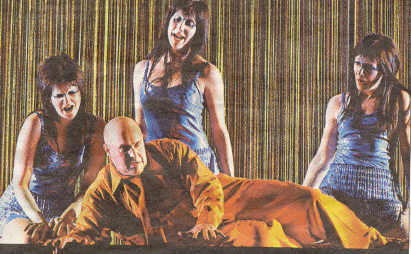
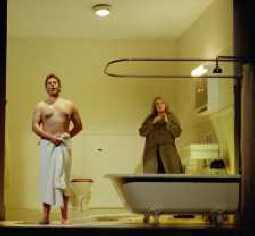
Wagner The Rhinegold ENO at The Coliseum, London 4 March 2004 Rhine Maidens Linda Richardson, Stephanie Marshall, Ethna Robinson An important evening, with critics admitted only belatedly to a later performance, after the costly and disruptive delay to the re-opening of the comfortably refurbished Coliseum. The production dominated attention at first, a modern domestic conception with Freia smothered in liquid gold through hose-pipes behind a curtain in Wotan's bathroom, complete with loo and toilet paper (only one, though, after ENO's Masked Ball in which the council members all sat on loos!). But read on, because this conception was entertaining, very watchable and inoffensive, and graced with some excellent costumes and superlative lighting. And for imperfect Wagnerites, this first of the tetralogy is attractive for the interplay of a large cast and plenty of action. I leave detailed review of the musical performance to dedicated Wagnerians and first, to digress, we must confess that two and a half hours was a strain, in oppressive heat (no evidence of the new air conditioning reaching the Circle) and without any opportunity to take a break and to stretch our legs. We found ourselves thinking about Wagner's inconsiderateness to elderly bladders, and about DVT which afflicts today's long distance voyagers sitting in aircraft seats! (I wonder how many listeners can concentrate through Wagner's long acts without their minds ever wandering?) Accepting Rhinegold's ground breaking continuous span from the preludial Eb to its eventual full cadence, it also has occurred to me to recall how easily we older record collectors used to take in our stride the enforced gaps imposed by 4 minute 78s (and do nowadays for the more or less "natural" commercial breaks on TV). But even then we looked forward to the uninterrupted continuity now taken for granted, and as a youngster I did at one point own an ancient record player with two turntables, which in longer works made it possible to shorten breaks between sides 2&3, 4&5 etc! We held to the musical continuity in our heads, aided by miniature scores when possible. The interlude for the descent to Nibelheim & Alberich's forge between Scenes 2 & 3 would lend itself to a fade and an interval; would that be any more sacrilegious towards Wagner than doing Das Ring der Nibelungen in English and in a setting which jettisoned the grandeur of his original conception? An interval would certainly help ENO's caterers (see the Sunday Times warning that a glass of champagne at the Coliseum now costs £10, 50p more than at Covent Garden)! The singing and acting seemed excellent overall to us, well prepared and rehearsed, and running smoothly on stage, even though what we were seeing was at odds with, and diminished, the mythical weight of Wagner's conception; his rhinemaidens, gods and giants were definitely demoted and brought into our own tawdry present-day world. The orchestra too seemed in fine command of it all (after a few shaky horn fluffs in the Prelude) and Paul Daniel steered the proceedings confidently. A particular joy for us (long term campaigners for surtitles even for opera in English) was the clarity of everything and from our allocated seats (G 11 & 12 in the Circle), well back under the Upper Circle shelf, the remarkable audibility of most of the words. More often we have been down in the Stalls or in the front Circle, with a fuller, richer sound reflected from the dome. For Wagner in English, that sacrifice in the interest of clarity suited us fine, even though the climaxes were inevitably somewhat muted. (Other reviews indicate that there may have been acoustical changes to the Coliseum?) There were some marvellously memorable images, the shimmering water of the Rhine, Erda singing gloriously from the Stalls, and the splendidly wobbly bridge on which the Gods trooped across to ENO's Valhalla. A distinguished Rhinegold, which whets the visual appetite for what Phyllida Lloyd has made of Sieglinde's home, and of Brunnhilde's rock for her long sleep before the ENO Siegfried reaches the Coliseum. The Rhinegold left us eager to see The Valkyrie when it is finally unveiled next year, and to discover how the cast will have developed since the public rehearsal at the Coliseum in 2002.
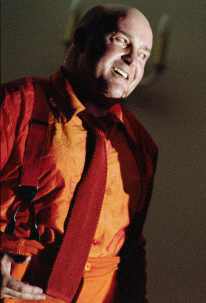
Andrew Shore (Alberich)
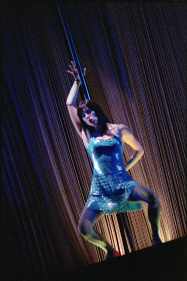
Linda Richardson (Woglinde)
Robert Hayward (Wotan), Claire Weston (Freia)
photographer Neil Libbert
|