|
Sonatas
and Arrangements: Matthew Jones
viola & Michael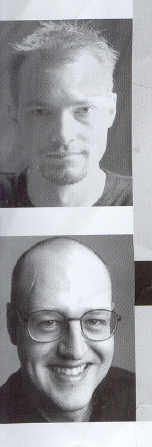 Hampton piano
Blackheath
Halls, 22 October 2003
Hampton piano
Blackheath
Halls, 22 October 2003
Johann Sebastian Bach /Kodaly: Chromatic Fantasia
for solo viola
Rebecca Clarke Sonata in E minor for viola
& piano (1919)
Paul Hindemith Sonata in F for viola &
piano, Op.11 No.4
Darius Milhaud /Levy: Saudades do Brasil
Leme & Ipanema
Sergey Prokofiev /Borisovski: Romeo and Juliet
- excerpts (for viola and piano)
Hats off
to Kodaly, Levy, Borisovsky - and Trent!
This event
was the first airing of a recital programme to be repeated
in Birmingham and on South Bank next month. Matthew Jones
has many strings to his bows; established violist, violinist,
composer, Alexander and Yoga teacher also. He is an impressive
player, economical of his movements in contrast with his charismatic
teacher Rivka Golani, who thows herself around on the platform
alarmingly, without parting company from her specially designed
asymmetric viola.
The arrangements
were the best part of this programme, the piano parts skilfully
reflecting the mellow quality of the viola, an instrument
too easily overwhelmed. Kodaly made the Chromatic Fantasia
(no fugue) convincing for the viola; I was reminded of the
music teacher at my school who regularly played a prelude
from the 48 at morning assembly, but declined to offer us
any of the fugues. A couple of the Saudades were
delicious and the Romeo & Juliet music once again
confirmed its strength in any guise. But they should play
Death of Juliet to end, not Mercutio.
Anthony
Trent was the pseudonym under which Rebecca Clarke offered
her prize-winning sonata of 1919; her cover was blown afterwards
to general amazement that the composer was 'a mere woman'.
It is a strong work, now familiar in the repertoire, but Michael
Hampton was too relentlessly assertive on the Bösendorfer;
a 10% reduction of tone in the louder and virtuosic parts
would share the audience's attention more fairly. The same
problem was noticeable in the heavily scored early Hindemith
sonata, published in the same year, began as a tribute to
Debussy upon his death in 1918; its main part is a long series
of ingenious variations. That reservation apart, this was
a well chosen recital programme, enjoyed in the informal setting
(at candle-lit tables) of Blackheath's congenial recital room.
|